Philip D. Beidler, Ph.D.

Philip Beidler is Professor of English at the University of Alabama, where he has taught American literature since receiving his Ph.D. from the University of Virginia in 1974. He is a College of Arts and Sciences Distinguished Teaching fellow and a winner of the Burnum Distinguished Faculty Award, the university’s highest honor for research. His most recent books are Late Thoughts on an Old War: The Legacy of Vietnam (2004), and American Wars, American Peace: Notes from a Son of the Empire (2007).
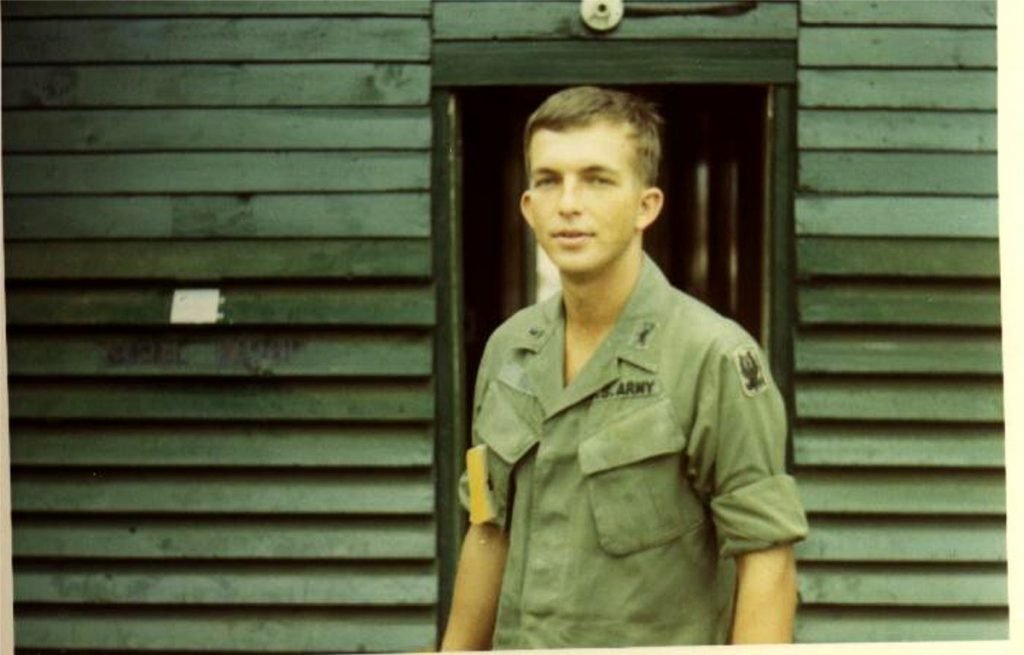
Philip served as an armored cavalry platoon leader in Vietnam and is considered one of the leaders in Vietnam War studies who has set forth what are sure to be lasting insights into the American literary response to Vietnam in his seminal work, American Literature and the Experience of Vietnam (University of Georgia Press, 1982).
Introduction to
Sergeant Back Again:
The Anthology of Critical and Clinical Commentary
The Vietnam War Novel that Made PTSD Real
By Philip Beidler
(Author of American Literature and the Experience of Vietnam)
Thirty years ago, when I first read Charles Coleman’s novel Sergeant Back Again, I sensed I had discovered an original and quite likely groundbreaking contribution to the fictional literature about the American experience of the Vietnam War: a highly imaginative, even experimental text, full of manipulations of point of view, sudden narrative shifts, sections of dialogue slipping into mad non sequitur, absurd but also convincingly placed in a clinical setting—replete with documentary and case reports, representations of counseling interviews and group therapy sessions, reconstructions of fantasy, memory, flashback, and repressed nightmare. Its uniqueness—and the measure of its great ambition, I felt strongly at the time—was its attempt to speak in a bold literary way about what seemed an emergent, newly-identified, peculiarly war-related form of psychological trauma, almost a signature malady, increasingly associated with representations of Vietnam veterans’ attempts to deal with war-related experiences and memory. It had already made frequent appearances in representations of the war in literature and film, in poetry, fiction, and drama, but also quite markedly in diary, memoir, oral history, and works of journalism, and reportage. Accordingly, I described Sergeant Back Again at the time as “a challenging, intelligent, painful book about the war haunted inmates of a psycho ward in a Stateside army medical center, and about their attempts, some successful and some monstrously failed, to put off the madness of the war that has in one way or another seized them to the farthest depths of their beings.”
I am sorry to say that I sacrificed much of what I see now, thirty years later, as regards the prophetic social and historical content of Coleman’s vision, to my excitement over the book’s formalist confirmation of a cultural studies argument I was making about the larger literature of the war—as a literature, in its attempt to synthesize a commitment to experiential truth-telling with an equally bold embrace of new strategies of invention, creating itself out of the postmodernist impasse as an affirmation of the possibilities of art to tell a truer truth. To some extent, the thesis worked out. What I was watching was Collins, Vietnam-veteran writer, himself a medical corpsman reliant on firsthand, deeply felt, intensely true experiences, in a clinical setting, with Coleman using the strategies of fiction to invent something, more or less chapter and verse, that we would come to call PTSD.
The plot may be rather simply summarized. A young, enlisted medic in a Vietnam surgical hospital, Specialist Andrew Collins, a sensitive, extremely intelligent medical school dropout, gradually loses his sanity as a result of his work with the maimed and dying in a U.S. Army surgical hospital. The end comes when he attends the death of a sergeant whom he recognizes to have been a patient previously repaired in surgery—with a nearly amputated limb sewed back on—and sent back into battle. In the midst of a mortar attack, Collins uses a surgical scalpel to brutally lacerate his own features. After sewing him back up, the sympathetic doctors with whom he has worked fake the medical report, declaring him wounded by mortar fragments. But by now there is a complication. Over an extended period, the increasingly unstable Collins has been composing, in a set of diaries and notebooks, fictitious letters from actual patients who have died in the surgical unit, detailing their horrific combat experiences and on many occasions various killings and atrocities in which they have participated. With these narratives of witness, seized among his personal effects, Collins has now also been placed under court-martial papers as a likely member of a subversive G.I. resistance organization, the ESR (Every Soldier’s Responsibility). Eventually he passes through the medical and administrative pipeline, winding up at the Chambers Psychiatric Pavilion of Brooke Army Medical Center, at Fort Sam Houston, near San Antonio, Texas, for mental evaluation and/or certification for court-martial for his antiwar activities. He will be ultimately judged insane, that is, or mentally competent to stand trial for his military offenses. There he falls under the care of an initially by-the-book, but increasingly sympathetic psychiatrist, Dr. Nieland. He also becomes friends with a mad, brilliant fellow patient, CPT Pollard, a former intelligence officer known to the inmates as the Professor. He is likewise under sentence of a diagnosis of permanent insanity or indictment for war crimes he has committed as a secret operative. At the same time, he says, whatever their madness or their crimes, they are all prisoners of a single predicament. “It’s not what happened just to me. It’s what happened to all of us in Vietnam. I am one of a million like myself. We are only minutely different from the killed, wounded, missing, and even those who returned or will return home. We are all the products . . . the results . . . of a crimson parallax. That’s what happened.”
Collins and Pollard eventually become fellow secret operatives against the system on the psycho ward precisely in the hope that they may find some small healing portion of recovered sanity. Watching Richard Nixon’s May 1970 Cambodian Invasion speech on TV, they form “the pact.” “The point of this is that we, gentlemen,” shouts Pollard, “we have to make some sense of this. We have to make some sense of ourselves.”
By the end, Pollard has not made it, boarded out and confined to the land of the maddest of the mad. Collins, by now an outpatient, may have some small hope. On a pass to San Antonio, somewhere out beyond the River Walk and the Alamo, he has knelt on a muddy stream bank and literally refigured a body out of clay somehow making whole the shattered soldiers whose life stories he has recorded in his letters. Sergeant Back Again is now back again in some strange moment of symbolic healing. At the same time, however, Sergeant Back Again is back again as a Major as well: the Army surgeon, Dr. Hepburn, who has covered for Collins in the first place, gotten him out of Vietnam, it turns out, is now himself a sojourner in the country of the mad.
At the end, Nieland is sanguine and encouraging, but with a diagnosis and prognosis not completely sure. One does not know which way it will go. Nor does anyone in the operations of the system. In a scene during an inmate church service midway in the text, a chaplain has belted out the customary words of comfort: “but where are we headed? Where, I ask you, is the final harbor of the soul?” “In da grave, man,” comes the not-too-helpful reply of one black patient.” Or maybe just some local hellhole on earth, maybe here, maybe Vietnam, says an old, crazy master sergeant. “I was glad when they said unto me,” whispers a third psycho, ‘“You’re going into the loony bin, my boy.’”
One sees now in all of this a book about a story we probably recognized but did not know at the time how to read, at least in its newest, challenging, creative iteration. Certainly we saw the relatively familiar outlines of a genre: the literature of shell shock; combat exhaustion; battle fatigue, born of a century of head cases. World War I memoir, poetry, fiction, drama, had brought us the harrowed company of Graves, Owen, Sassoon, patients of the pioneering socio-anthropologist W.H.R. Rivers at the famed British officers’ neuropsychiatric facility at Craiglockart, Scotland, fondly known to its inmates as Dottyville; in America, one could read it in the Hemingway stories like “Soldier’s Home,” “In Another Country,” “A Way You’ll Never Be.” After World War II, we would embrace “Catch-22” as one of the commonest phrases in the language and go to the movies to watch the odd, vaguely comedic, profoundly sad Captain Newman, M.D. And even as Vietnam was grinding to an end, Korea would be imaged in the TV series M*A*S*H, with its standing gag of crazy Klinger trying to get out of the war on a Section 8.
I don’t feel so bad. Although by the mid 1970s the image of the crazed Viet vet was all over the place—prompting Tim O’Brien, among others, to write an article on what a bizarre cliché it had become—near everybody else missed the signals of a how deeply it was embedded as not just an individual but corporate pathology. In literature, David Morrell’s First Blood, genesis of the Rambo legend, lay buried there in pulp fiction for nearly ten years. One certainly sensed the tones of dark, desperate confession in Tim O’Brien’s If I Die in a Combat Zone, Philip Caputo’s A Rumor of War, and Ron Kovic’s Born on the Fourth of July, a triad of early narratives of personal witness, each containing a core of atrocity. Similar in structure and theme were combat novels such as James Webb’s Fields of Fire, Gustav Hasford’s The Short Timers, and Winston Groom’s Better Times Than These. A small handful of texts measured traumatic stress levels in medical units, including Ronald Glasser’s 365 Days and Lynda Van Devanter’s Home Before Morning. Second-generation novels, eventually O’Brien’s In the Lake of the Woods; Caputo’s Indian Country; or Steven Wright’s Meditations in Green, came to whisper ominously that lurking somewhere in every soldier’s memory might be at least one mini-My Lai.
In film, insanity became the standard metaphor of Vietnam. Following First Blood, The Deer Hunter showed Fenimore Cooper myth and rust belt American politics filtered through the idiotic conceit of Russian Roulette. In Apocalypse Now, Francis Ford Coppola attempted to re-create for Vietnam the deracinated, hallucinatory world of Joseph Conrad’s Marlow and Kurtz in Heart of Darkness by way of voice-over by Michael Herr—with the latter’s mad, frantic Dispatches having already made him the laureate of America’s own heart of darkness trip. More to the point, one might see now, was the John Voight/Jane Fonda/Bruce Dern Hollywood vehicle Coming Home, with Robert Carradine as a secondary character’s kid brother. Here, the psychologically traumatized, permanently deranged vet showed up not out there in the heart of the heart of the country, taking on entire police forces and blowing up small towns, but tucked away in the psycho and drug and alcohol wards of VAs getting minimal treatment and zero publicity.
Meanwhile, on the clinical scene itself, Coleman as well proved himself to be out there ahead of everyone recapitulating with penetration and accuracy the curious reciprocity of art with life. The earliest public appearances of something resembling a quasi-clinical literature of Vietnam War combat trauma—Robert Jay Lifton’s Home from the War, for instance, or Arthur Egendorf’s subsequent Healing from the War—were in large degree discredited, I am now ashamed to say, even for so profoundly an anti-war vet as myself, by a certain preening of the new left politics of the authors. Testimonies of veterans, rap groups as they were called in those days, nearly always wound up connected—as Coleman astutely and convincingly makes happen in his novel, with great, palpable menace—with such radical organizations as VVAW or the Winter Soldier investigations. Now I see this was exactly what had sent me awry: characteristic, I suspect, of many Vietnam combat veterans, especially, my contempt for and horror of ideology, of any uncritical ideological positioning. Like many others, I thus did not take these earliest works as seriously as they demanded. But there it was, almost uncannily recapitulated by Coleman in the novel—a protagonist and a brilliant interlocutor, both sentenced simultaneously to roles as simultaneously a madman and a traitor. Their choices—confinement in a facility for the insane or trial and imprisonment as a turncoat giving aid and comfort to the enemy—were the familiar ones from the structures of 20th century totalitarianism, left and right.
Retrospectively as well, with all due wisdom of hindsight, it now remains for one of course to note the power accrued to Sergeant Back Again by the literary novelist’s calling into its textual vicinity the shadows of not just one but two of the great American literary texts of subversive antiauthoritarian madness of the era, Joseph Heller’s Catch-22 and Ken Kesey’s One Flew Over the Cuckoo’s Nest. As with Heller, the broader world of Sergeant Back Again is the world of Catch-22, not just the war but the war-breeding system, where “they” can do anything we can’t stop them from doing. Recurrently imaged are the constant collisions and reversals of the categories of madness and sanity, the paranoiac congruencies, the paranoid logic of both the inmates and the keepers, those in charge, somehow terrified of what their quondam charges may be saying or writing about them. And of course given the setting, with Coleman’s ready invocations of One Flew Over the Cuckoo’s Nest become imaged even more obvious parallel conflicts of authority, freedom and confinement, sanity and madness, as with Big Nurse and the psychiatrists arrayed against McMurphy, Chief Broom, Billy Bibbitt, and the rest. At first the Chambers Pavilion scenes in Coleman’s book really comprise a contest between Collins and Pollard to decide the title of bull goose loony. When they join forces, the authority structure becomes an economy of farce—the chaotic group therapy sessions, the field trip to the Alamo, the patient-civilian social mixers. In many of the respects noted above, veteran Yossarian and McMurphy watchers are still looking for the Catch-22 /Cuckoo’s Nest of Vietnam, though in the first instance someone could probably make a case for Tim O’Brien’s Going After Cacciato, perhaps wedded to Stephen Wright’s Meditations in Green. For the second, one is tempted to nominate Michael Herr’s Dispatches—an entire country and an entire war become a gigantic loony bin, with psychos in charge from top to bottom and bottom to top. More apt and appropriate would be the recognition of Coleman’s Sergeant Back Again, in its harrowed, quiet, mad, heartbreaking way, with hardly a whiff of literary conceit, managing to give us the war’s great book of Pictures from an Institution.
As to structural analysis, I stand by my initial formalist proposition. Distinctly creative truth-telling was the virtue I ascribed to Coleman—“self-consciously imaginative art that compels us to attend . . . to the most unbearable intensity of its experiential resonance;” and simultaneously “the witness of personal memory that repeatedly calls attention to what seems its strange, unsettling literariness.” Before the clinical discovery, formulation, definition/invention of PTSD, that is—not to take place in fact until the DSM IV—it already stood on record in Coleman’s book as a permanent part of the science of the literature and of the literature of the science. In all these senses, Charles Coleman’s novel Sergeant Back Again was the book that made PTSD real. We applaud ourselves on doing better now. Still, God knows our VA hospitals are full of the latest crop of psychological casualties. And then there’s all the talk about PTSD purple hearts. And of course there’s the well-known spike in veteran suicides. My response, after all these years, will always still remain more personal than political.
To Charles Coleman, I will simply feel gratitude for an addition to the cherished body of text I call wisdom literature. Specifically, I will do so as an American combat veteran of the Vietnam War, having spent my time on death’s gray landscape and having also sojourned later in the country of the mad. This story is to some degree my story. But mainly it will remain even beyond the book—in its real touch of genius to me—the stories contained in the spurious letters. These are what Tim O’Brien would call the lives of the dead. They write the bodies, reassemble the flesh and the bones, make the vanished, dead, forgotten ones speak. After wars, dead men do tell tales: Aeneas’ father; Banquo’s Ghost; the ghost-narrators of William March’s World War I classic Company K or the profane grunt-narrator-chorus of Larry Heinemann’s Paco’s Story. That is, it remains a fairly old conceit, albeit one that art, even as revealed by just such a handful of examples, can make perpetually new. The title, Sergeant Back Again becomes Sergeant Back Again Back Again in all the senses of the latter phrasing. In the war, the dismembered body once brought back to life comes back dismembered again, this time for keeps; in the text, the letter, the novel, it remains the unkillable narrative of a life.
This, surely, is what Collins has in mind within the novel when, though still confined to the psycho ward, he suddenly begins writing again near the end. “If you want people out there to understand how all this happened, you’re going to have to put them in here, right inside Chambers. You’re going to have to make them sense it, feel it in themselves, in their bones first. Then, maybe, they’ll comprehend it in their brain.” This is how we do it. Such are the stories we honor by keeping them alive until we ourselves are gathered into the shades.
Philip D. Beidler